Showing posts with label Weapons. Show all posts

Tuesday, February 23, 2016


''Togetherness''

This article,  published in the December 1960 issue of Aerospace Magazine, describes safety procedures for the correct handling of the Boeing BOMARC air defense missile during air transport. The tone of the article is unusual for such a subject -' 'As this article goes to press, the safety record of Bomarc airlifts can be summed up in four words: so far, so good. You may recall, however, the optimist who jumped off the top of a New York office building. He was heard to yell the same thing as he passed the 20th floor: so far, so good''
The writer of the article, some guy named Thomas Pynchon, quit Boeing in 1962 and went on to become a novelist of some renown.

Aerospace Safety Magazine, 12/1960, USAF

http://www.vheissu.net/bio/eng_togetherness.htm

Friday, August 21, 2015


''What's THIS button for?''


''Declassified nuclear weapons employment manuals from the Cold War.''

Nuclear weapons employment manuals 


Tuesday, July 21, 2015


''In time, those Unconscionable Maps no longer satisfied...''


''If we are to discuss the limitations of simulation, we must define what simulation is. The literature in the field is of limited usefulness in tying down exactly what the term describes. The more recent the document, the more likely it is that the author will quote several alternate definitions, reject them all and proceed to develop his own definition which is more general and less restricting than any of those given. The use of the term "simulation" seems to outgrow even the broadest definition. I will not attempt a precise definition, but as an alternate will suggest that the history of the development of simulation as we know it today may be a less rigorous, but more satisfying way to describe simulation. The origins of simulation are generally traced to the work of Von Neuman and Ulman in the late 1940's. They coined the term "Monte Carlo Analysis" to describe a technique whereby essentially deterministic problems, too expensive or complex to solve analytically, could be solved by treating them as stochastic problems.''

The trend in simulation (Computers and Automation- January 1968, page 44)

https://archive.org/details/bitsavers_computersA_9729690


Monday, July 20, 2015


''Terminate, with extreme prejudice''


''SAIGON. - In a nondescript white concrete-block building on the outskirts of this capital city, an International Business Machines Corp. Model 1430 computer runs 24 hours a day grinding out one of this war-torn country's most valuable products: Military intelligence. The building houses one of four intelligence centers scattered around Saigon. Using automatic data processing equipment, this intelligence setup - the biggest operated by the United States outside Washington and the biggest ever used against a single enemy - is now handling a massive assortment of facts and figures aimed at winning the Vietnam war. More than 100,000 separate items are being added to the system's computerized files each month; a 60-ton haul of enemy documents seized last January is still yielding valuable information. Tens of thousands of IBM punch cards help keep tabs on the foe; they bear detailed identification of captured Communists and Vietcong suspects.''

COMPUTERIZED INTELLIGENCE NETWORK IN SOUTH VIETNAM 
Computers and Automation 1967/08 page 34

https://archive.org/details/bitsavers_computersA_7199056

Saturday, July 11, 2015


''Like a thief in the night''


''Special reconnaissance (SR) is defined as reconnaissance and surveillance actions conducted by Special Forces (SF) to obtain or verify, by visual observation or other collection methods, information concerning the capabilities, intentions, and activities of an actual or potential enemy or to secure data concerning the meteorologic, hydrographic, geographic, or demographic characteristics of a particular area. It includes target acquisition, area assessment, and poststrike reconnaissance.''

FM 31-20-5 Special Forces Reconnaissance Tactics,Techniques,& Procedures (1990)

https://archive.org/details/milmanual-fm-31-20-5-special-reconnaissance-tactics-techniques--proced

Tuesday, March 31, 2015


 ''Whose Shoulder are You Looking Over Anyway?''


Document leaked to the press in 2012 outlining the N.S.A.signal intelligence program.
  1. "Revolutionize analysis – fundamentally shift our analytic approach from a production to a discovery bias, enriched by innovative customer/partner engagement, radically increasing operational impact across all mission domains."
  2. "Fully leverage internal and external NSA partnerships to collaboratively discover targets, find their vulnerabilities, and overcome their network/communication defenses."
  3. "Dynamically integrate endpoint, midpoint, industrial-enabled, and cryptanalytic capabilities to reach previously inaccessible targets in support of exploitation, cyber defense, and cyber operations."
SIGINT Strategy Document (N.S.A. 2012)

https://archive.org/details/NSA-SIGINT-Strategy

Sunday, March 29, 2015


''The science of control''


                                  ''The most fundamental concept in cybernetics is that of “difference”,
                                   either that two things are recognisably different or that one thing
                                   has changed with time''

An introduction to Cybernetics (William R, Ashby,1956)

https://archive.org/details/introductiontocy00ashb

Thursday, March 26, 2015


''Bada bing, bada... Boom!''


The ruggedness, simplicity, low cost and effectiveness of the RPG-7 has made it the most widely used grenade launcher in history. More than nine million units have been delivered since it was introduced by the Soviet armed forces in 1961.The RPG-7 has been used in almost all conflicts since the 1960s, from Viet-Nam to Syria.

RPG-7 Soviet Antitank Grenade Launcher manual (U.S. Army, 1976)

https://archive.org/details/milmanual-rpg-7-antitank-grenade-launcher

''Say hello to my little friend!''


Operator's Manual For M16, M16A1 (1985)

https://archive.org/details/OperatorsManualForM16M16a1

Wednesday, March 25, 2015


''Off We Go Into the Wild Blue Bunko...''


''Air Force PSYOP forces support US national and military objectives through planned operations to convey information to target audiences. PSYOP provide a low-cost, high-impact method to deter adversaries and obtain the support of friendly or neutral target audiences. The effective use of PSYOP can provide asymmetrical advantages by exposing and exploiting adversaries’ resistance and psychological weaknesses to create uncertainty and ambiguity, thereby lowering their morale and will to fight and win. In combination with military operations, PSYOP can encourage popular discontent with the adversary’s leadership and degrade the enemy’s ability to conduct military operations.''

Psychological Operations (USAF, 1999)

https://archive.org/details/PsychologicalOperations_201502

Thursday, March 5, 2015


''We are 15 million years overdue for an asteroid strike''


''The main goal of this study was to find feasible methods and strategies for the deflection of large asteroids in the diameter range of 5 to 200 km.''

To the deflection of asteroids in the diameter range of 5 to 200 km (H.K. Hahn, 2014)

https://archive.org/details/ToTheDeflectionOfAsteroidsInTheDiameterRangeOf5To200Km

Monday, March 2, 2015


''Hearts and minds''


Manual published by the Central Intelligence Agency that was distributed in Nicaragua in the early 1980s.

PSYCHOLOGICAL OPERATIONS IN GUERRILLA WARFARE (1981)

https://archive.org/details/PsychologicalOperationsInGuerrillaWarfare

Wednesday, February 18, 2015

Friday, February 6, 2015


''Tonight I'm gonna party like it's nineteen eighty-four''


''Variant, a radical art magazine''

 Variant Magazine No. 1-16 (1984-1994)

https://archive.org/search.php?query=subject%3A%22Variant+magazine%22

Saturday, January 24, 2015


1958: ''How the Web Was Won''


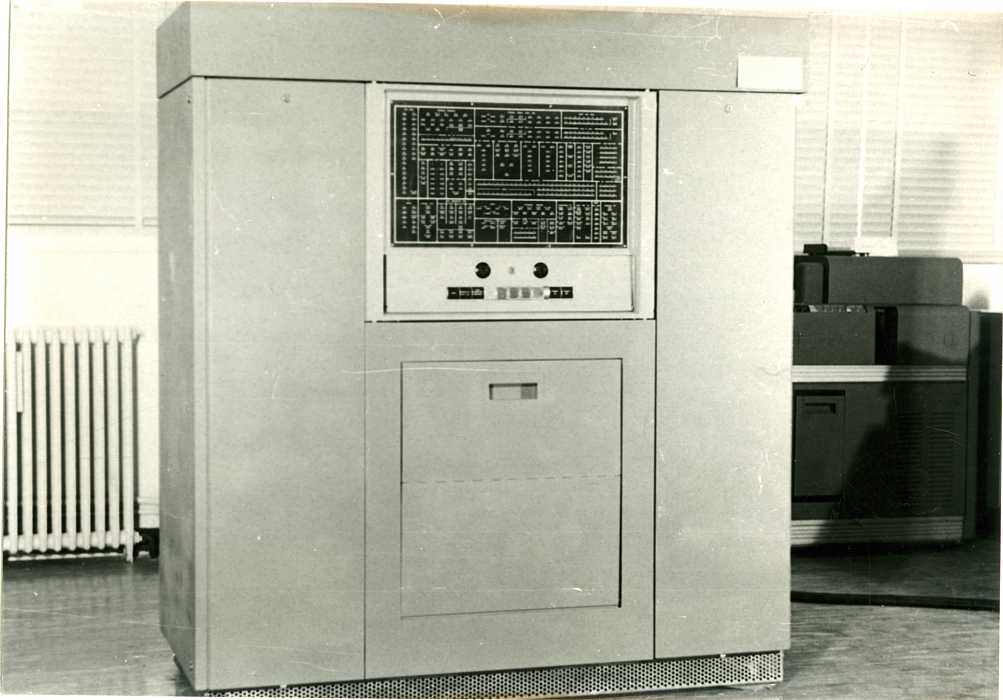
The Semi-Automatic Ground Environment (SAGE)  air defense system was designed by IBM for the US Air Force in the early 1950s to coordinate the response to air attack:
''Its innovative technological contributions to IBM and the IT industry as a whole were significant. These included magnetic-core memories, which worked faster and held more data than earlier technologies; a real-time operating system (a first); highly disciplined programming methods; overlapping computing and I/O operations; real-time transmission of data over telephone lines; use of interactive terminals and input light pens (a first); redundancy and backup methods and components; and the highest reliability of computer systems (uptime) of the day. It was the first geographically distributed, online, real-time application of digital computers in the world. Because many of the technological innovations spun off from this project were ported over to new IBM computers in the second half of the 1950s by the same engineers who had worked on SAGE, the company was quickly able to build on lessons learned in how to design, manufacture and maintain complex systems.''
http://www-03.ibm.com/ibm/history/ibm100/us/en/icons/sage/

SAGE Air Defense System general manual (I.B.M.,1958)

https://archive.org/details/bitsavers_ibmsageSAGm1958_18586730

SAGE Air Defense System Input System (I.B.M.,1958)

https://archive.org/details/bitsavers_ibmsage352_26517675

Friday, January 16, 2015


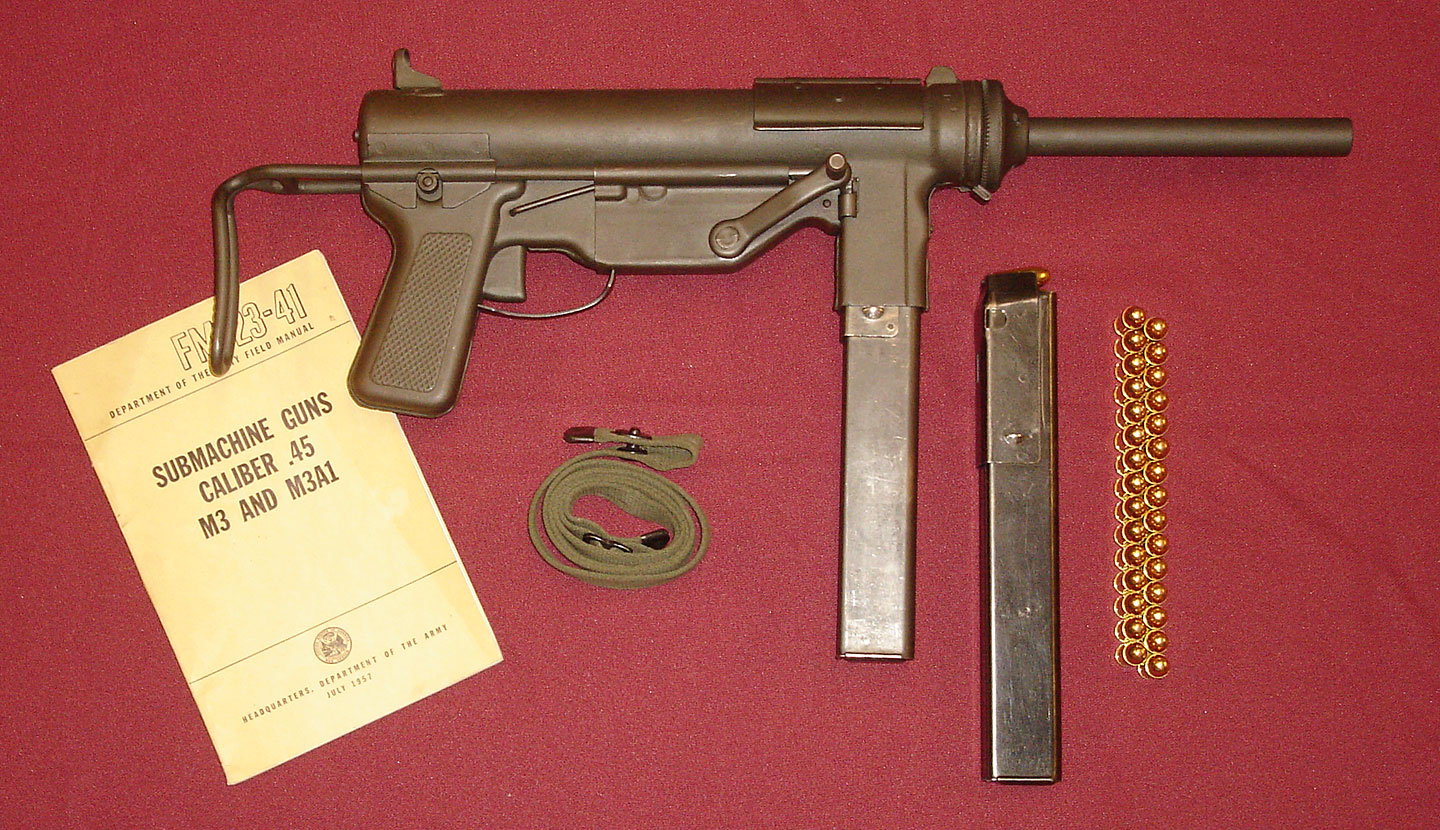
''An elegant weapon for a more civilized age.''


The M3 was created during WW2 as a weapon for tank crews. It was still in use well into the 80s....

Grease Gun M3-M3A1 - FM 23-41 Service manual

https://archive.org/details/gunmanual_Grease_Gun_M3-M3A1_-_FM_23-41