Showing posts with label ''Artificial Intelligence''. Show all posts

Monday, August 17, 2015


''I visualize a time when we will be to robots what dogs are to humans, and I'm rooting for the machines''
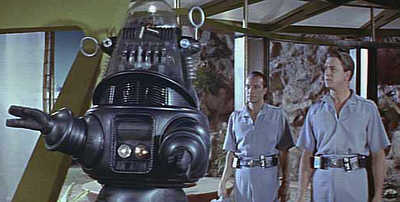


''The book begins with researches in robot modelling & design, in which different approaches in kinematical, dynamical and other design issues of mobile robots are discussed. Modelling is a first step in designing a new system; kinematics is the most basic study of how mechanical systems behave. In mobile robotics, we need to understand the mechanical behaviour of the robot both in order to design appropriate robots for tasks and to understand how to create control software for an instance of mobile robot hardware. This chapter presents different researches in design of various robot systems.''

Cutting Edge Robotics (2005)

https://archive.org/details/ost-engineering-cutting-edge-robotics

Tuesday, July 21, 2015


''In time, those Unconscionable Maps no longer satisfied...''


''If we are to discuss the limitations of simulation, we must define what simulation is. The literature in the field is of limited usefulness in tying down exactly what the term describes. The more recent the document, the more likely it is that the author will quote several alternate definitions, reject them all and proceed to develop his own definition which is more general and less restricting than any of those given. The use of the term "simulation" seems to outgrow even the broadest definition. I will not attempt a precise definition, but as an alternate will suggest that the history of the development of simulation as we know it today may be a less rigorous, but more satisfying way to describe simulation. The origins of simulation are generally traced to the work of Von Neuman and Ulman in the late 1940's. They coined the term "Monte Carlo Analysis" to describe a technique whereby essentially deterministic problems, too expensive or complex to solve analytically, could be solved by treating them as stochastic problems.''

The trend in simulation (Computers and Automation- January 1968, page 44)

https://archive.org/details/bitsavers_computersA_9729690


Monday, July 20, 2015


''Terminate, with extreme prejudice''


''SAIGON. - In a nondescript white concrete-block building on the outskirts of this capital city, an International Business Machines Corp. Model 1430 computer runs 24 hours a day grinding out one of this war-torn country's most valuable products: Military intelligence. The building houses one of four intelligence centers scattered around Saigon. Using automatic data processing equipment, this intelligence setup - the biggest operated by the United States outside Washington and the biggest ever used against a single enemy - is now handling a massive assortment of facts and figures aimed at winning the Vietnam war. More than 100,000 separate items are being added to the system's computerized files each month; a 60-ton haul of enemy documents seized last January is still yielding valuable information. Tens of thousands of IBM punch cards help keep tabs on the foe; they bear detailed identification of captured Communists and Vietcong suspects.''

COMPUTERIZED INTELLIGENCE NETWORK IN SOUTH VIETNAM 
Computers and Automation 1967/08 page 34

https://archive.org/details/bitsavers_computersA_7199056

Thursday, February 19, 2015


''More human than human.''


Mixed Reality and Human-Robot interaction (2009)

https://archive.org/details/Mixed_Reality_and_Human-Robot_Interaction


"Do not fold, spindle or mutilate"


''The history of computers - from the discovery of the abacus, through Jacquard and his use of punched cards in weaving, to the latest developments and the enormous potential for the future.''

Computers - The Machines We Think With (D.S. Halacy, 1969)

https://archive.org/details/computersmachine00dsha

Saturday, January 24, 2015


1958: ''How the Web Was Won''


The Semi-Automatic Ground Environment (SAGE)  air defense system was designed by IBM for the US Air Force in the early 1950s to coordinate the response to air attack:
''Its innovative technological contributions to IBM and the IT industry as a whole were significant. These included magnetic-core memories, which worked faster and held more data than earlier technologies; a real-time operating system (a first); highly disciplined programming methods; overlapping computing and I/O operations; real-time transmission of data over telephone lines; use of interactive terminals and input light pens (a first); redundancy and backup methods and components; and the highest reliability of computer systems (uptime) of the day. It was the first geographically distributed, online, real-time application of digital computers in the world. Because many of the technological innovations spun off from this project were ported over to new IBM computers in the second half of the 1950s by the same engineers who had worked on SAGE, the company was quickly able to build on lessons learned in how to design, manufacture and maintain complex systems.''
http://www-03.ibm.com/ibm/history/ibm100/us/en/icons/sage/

SAGE Air Defense System general manual (I.B.M.,1958)

https://archive.org/details/bitsavers_ibmsageSAGm1958_18586730

SAGE Air Defense System Input System (I.B.M.,1958)

https://archive.org/details/bitsavers_ibmsage352_26517675

Friday, January 23, 2015


"Vivre? Les Robots feront cela pour nous."


''THE GENERAL USE OF ROBOT MANIPULATORS IS EXPLAINED AND THE BASICS OF THEIR DESIGN AND OPERATION ARE DESCRIBED...''

ROBOT MANIPULATORS (1975)

https://archive.org/details/nasa_techdoc_19750021707

Thursday, January 15, 2015


''Mensch Machine,Ein Wesen und ein Ding''


The Emergence of Machine/Human Organizations (2006)

The Emergence of Machine/Human Organizations in the Context of Recent Advances in Information Technologies: A Descriptive Historical Perspective.

https://archive.org/details/The_Emergence_of_MachineHuman_Organizations

Wednesday, January 14, 2015


''Sherlock Holmes smarter brother''


Vannevar BushMycroft Holmes, for real.

Science, the endless frontier- Report on a program for postwar scientific research (1945)

https://archive.org/details/scienceendlessfr00unit